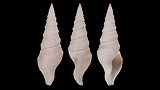
Shells minute to medium-sized, fusiform or biconic, high-spired; whorls flat to convex or carinate, but always with a subsutural ramp; aperture short or long, but always narrow, with a marked posterior siphonal sinus; anterior canal quite short, open; columella smooth, sometimes folded.
Drilliola Locard, 1897:
Shell small, biconical, with a narrow spire, a pointed apex, and a body whorl occupying about half of the total shell height; whorls barely convex; subsutural ramp narrow; sculpture made up of spiral ridges; interspaces between the ridges with an axial microsculpture of undulating riblets; aperture subquadrangular, with a deep posterior sinus and a widely open anterior canal, rather small; inside of labial margin smooth, columella smooth. Protoconch paucispiral.
Microdrillia T. L. Casey, 1903:
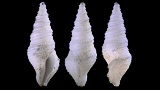
These shells &laquio; are all very small and characterized by a well-developed, multispiral, closely coiled embryo, having one to three of its basal whorls costulate, few body whorls which are wholly devoid of costse but spirally carinate, the retral sinus relatively large, circularly rounded and close to the suture, the aperture oblique, columella callous, with or without plications, and the canal short or subobsolete. » – T. L. Casey: “Notes in the Conrad collection of Vicksburg fossils, with descriptions of new species”, Proceedings of the Academy of Natural Sciences of Philadelphia vol. 55, Philadelphia 1903, p. 276.
Typhlomangelia G. O. Sars, 1878:
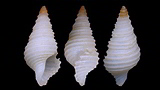
« Shell narrow and lenghtened; spire conical; whorls numerous, nodulous in the middle; aperture narrow, progressively shrinking into a short canal; labial sinus distinct; labrum simple, arcuate and curved in the middle; operculum distinct, pyrifom. The animal is eyeless. » – G. O. sars: Bidrag til kundskaben om norges arktiske fauna…, Christiania 1878, p.241. Sars introduced the name Typhlomangelia for the first time in 1870, in his Bidrag kundskab om Christianiafjordens fauna vol. II, p.50, item 4 – Pleurotoma (Typhlomangelia S.) nivalis Lovén, but he did not explain this name before his general work of 1878, where it gave it generic rank.