| Alvania cimex (Linnaeus, 1758) |
 |
Mediterranean. Shallow water to lower circalittoral.
Grazer and detritus feeder. Basionym: Turbo cimex.
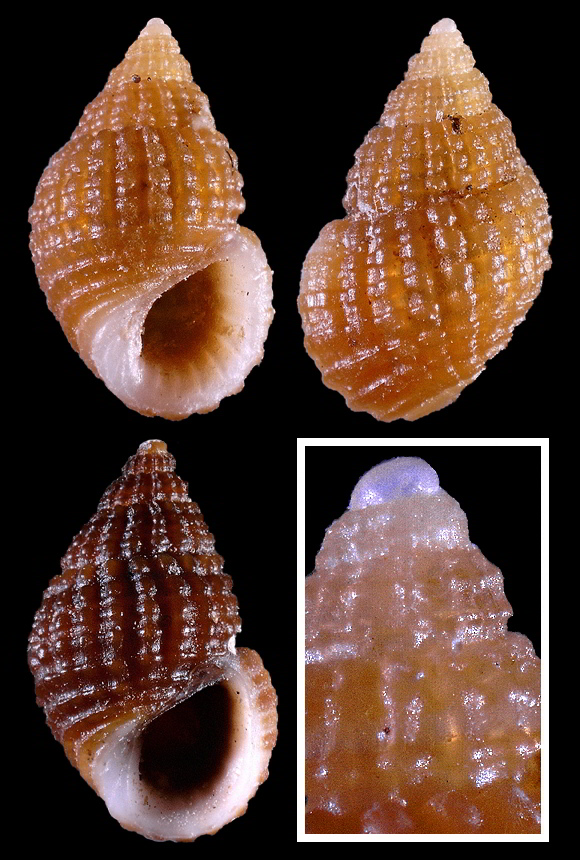
Shallow water, Anse de l’Arène, Cassis, Provence, S. France. 4,75-5mm. The variant ex colore “fusca” Philippi. |
 |
Synonyms: cimicina, europea, granulata, pyramidata…
« Shells of A. cimex s.s. can only be distinguished from those of A. mamillata by the dimensions of the apex [smaller in cimex] and by the number of whorls of the protoconch [2-2.3 in cimex, 1.3 in mammillata]. » – A. Verduin: “Alvania cimex (L.) s.l. an aggregate species” Basteria 50: 25-32, 1986.
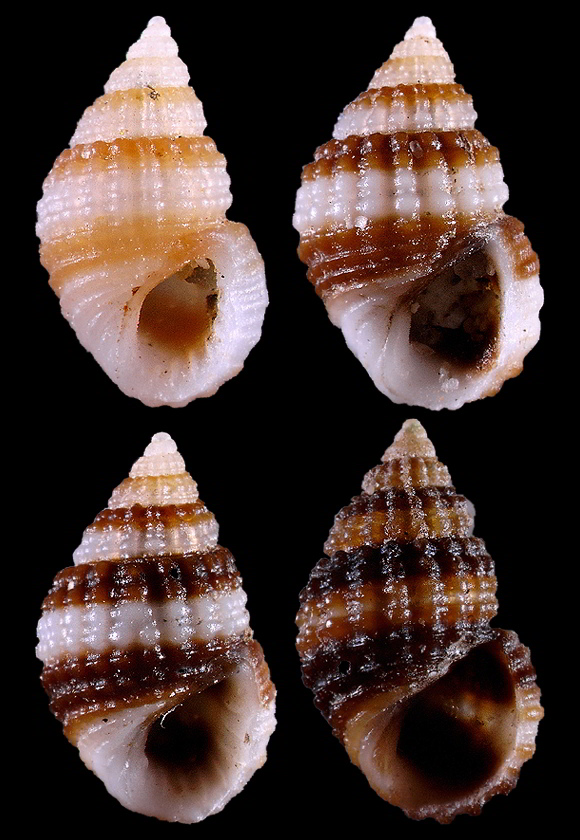
Var. ex colore “fasciata” Philippi.
12m deep, Scilla, Messina Strait, SW. Italy. 4-5mm. |
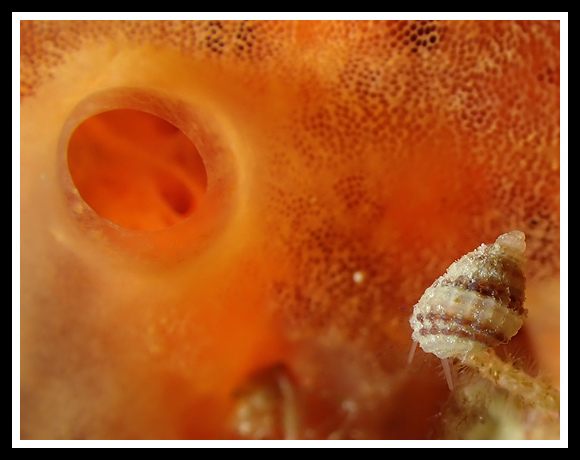 |
Le Grand Congloué Reef, east of Riou Island, southern coast of Marseilleveyre mountain range, Bouches-du-Rhône, S. France. Original picture provided by P. Corbrion for iNaturalist.
– (CC BY-NC-SA) – |
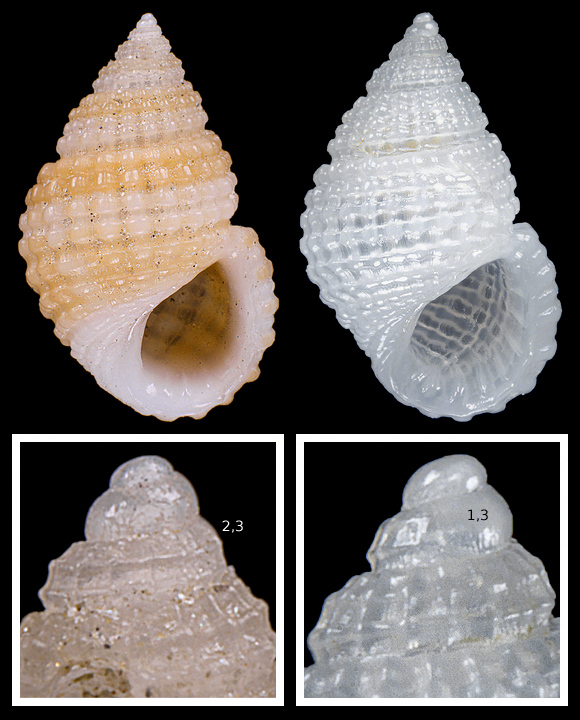 |
Comparison between a cimex at left and a mamillata at right.
Original pictures provided by A. Nappo (IT).
– (CC BY-NC-SA) –
This white colour in mamillata is unusual. |
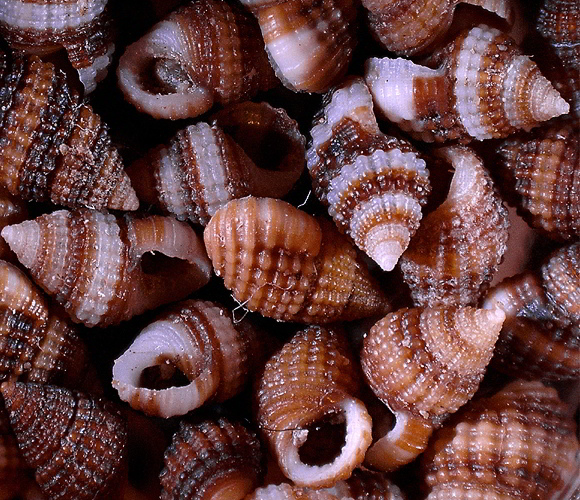 |
| The labial varices seen by Brocchi are clearly visible in the adult specimens of this group, collected at 8m deep, Bozcaada island, Çanakkale province, W. Marmara, NW. Turkey. |
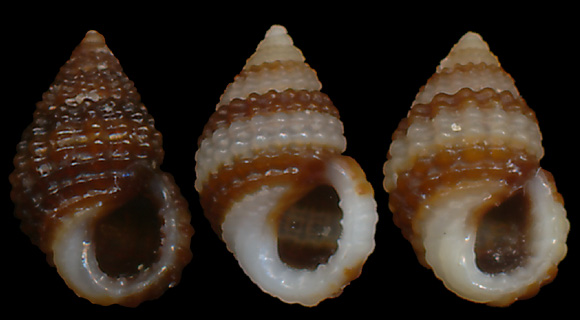 |
| 8m deep, a the edge of a Posidonia meadow, Tenda Bay, NW. of Itanos, N. Palekastro, E. Sitia, NE. Crete. 3,25-3,5mm. |
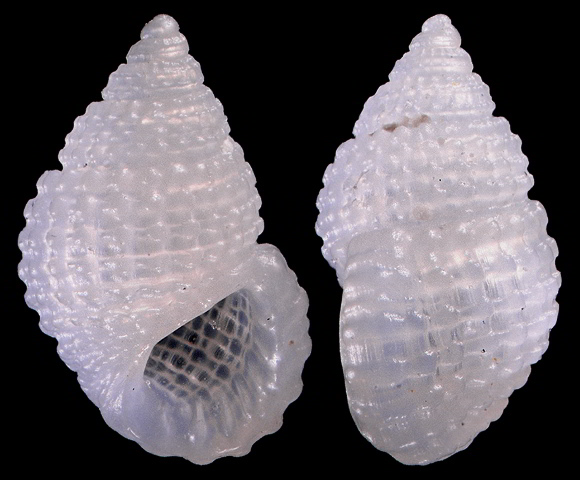 |
| Var. ex colore “lactea” Philippi? Most probably a mamillata, with is big protoconch. Same spot. 3,7mm. |
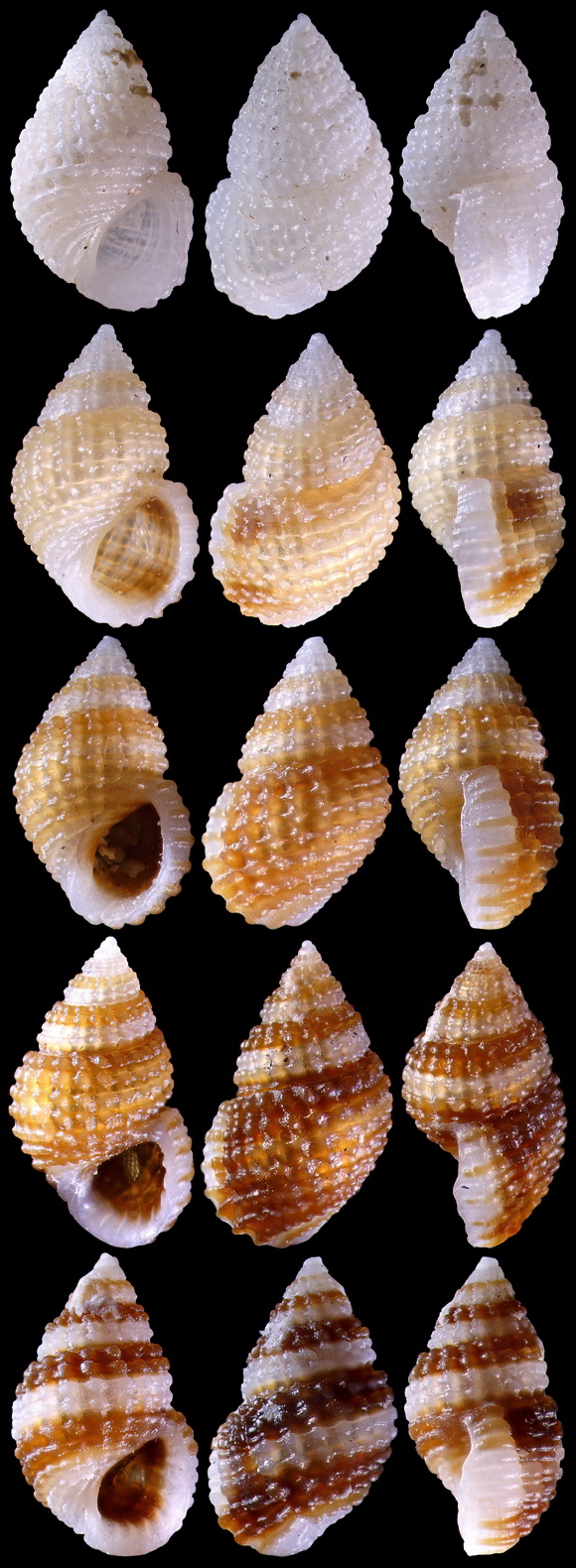 |
| Adult and subadult specimens collected at 3-5m deep, in the wide Posidonia meadow of the Anse des Fossettes, at the root of the eastern peninsula, Saint-Jean-Cap-Ferrat, Alpes-Maritimes, SE. France. 5,2-6mm. True “lactea”, with its small protoconch, on the first row on top. |
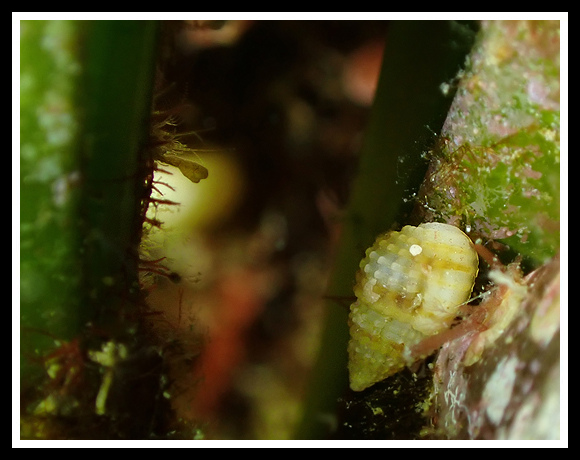 |
| In Posidonia leaves, La Gabinière islet, south of Port-Cros island, Var, S. France. Original picture provided by P. Corbrion for iNaturalist – (CC BY-NC-SA). |
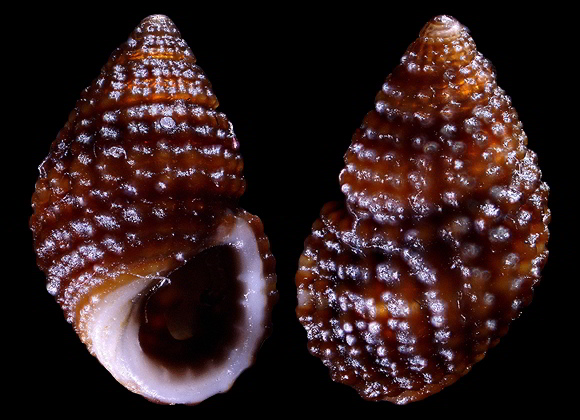 |
Ultra “fusca” x “fasciata”.
Cap Ras, Llançà, Girona, Catalunya, NE. Spain. 5mm. |
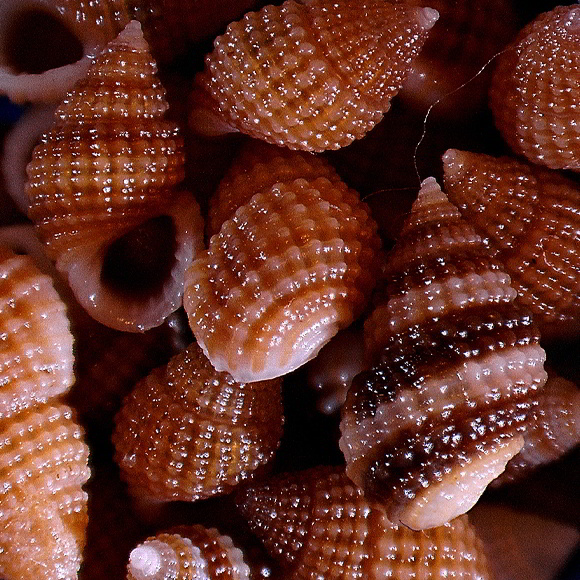 |
| In Posidonia beds, Saint-Tropez, Var, Côte d’Azur, S. France. |
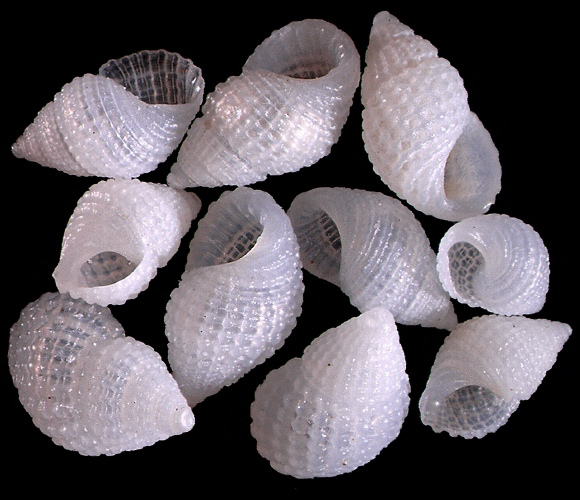 |
An all white population from the outermost shore of Elafonisi, SW. of Kissamos, W. Crete. 2,2-3,6mm. Apical areas eroded.
So, “lactea” or mamillata? |