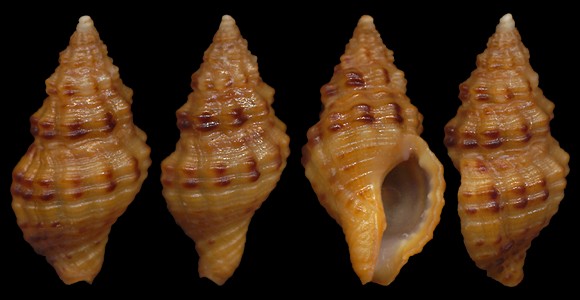
Predator in the infralittoral and the circalittoral.
Protonym: Pollia coccinea. Synonym: scaber Locard.
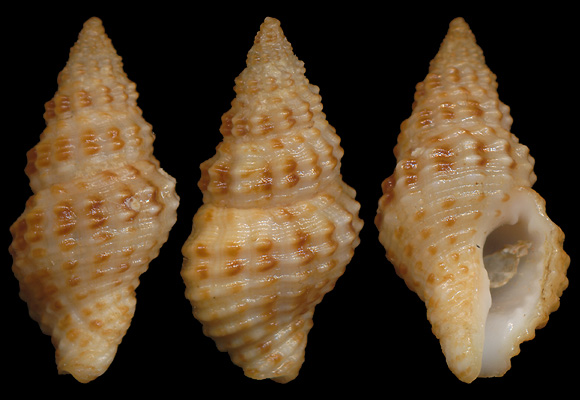
Shallow water under dead coral, Torre Astura, Nettuno, Lazio, W. Italy. 10mm.
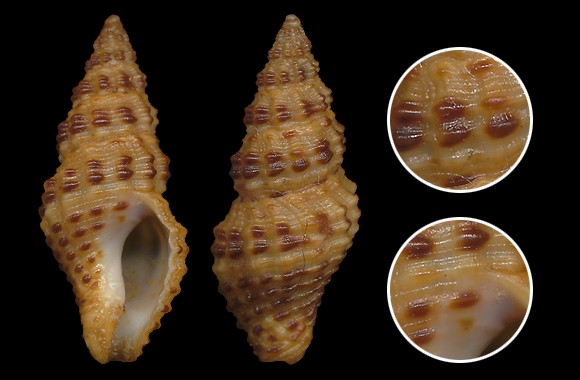
The species can often (but not always) be recognized by its double row of pale nodules around the suture, overtopped by a double row of dark nodules. The background varies from a pale yellow to a pronounced orange-fawn. Aperture white; labial margin denticulate inside; siphonal canal short; no umbilicus; protoconch elongate.
Uncommon slender specimen from 2-3m deep, l’Escala, Girona, Catalunya, NE. Spain. 15,5mm.
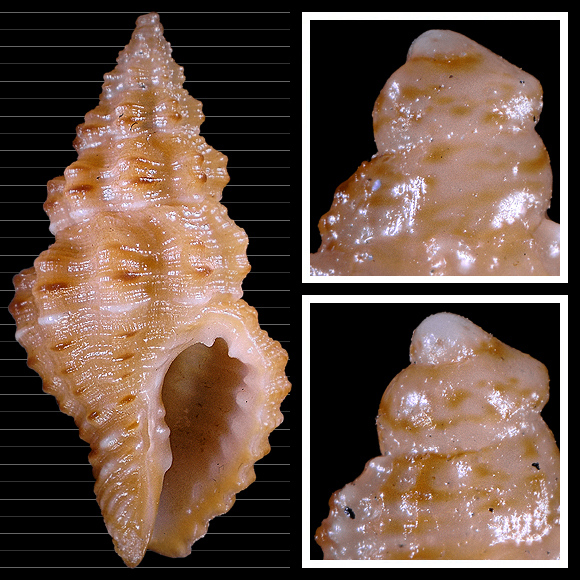
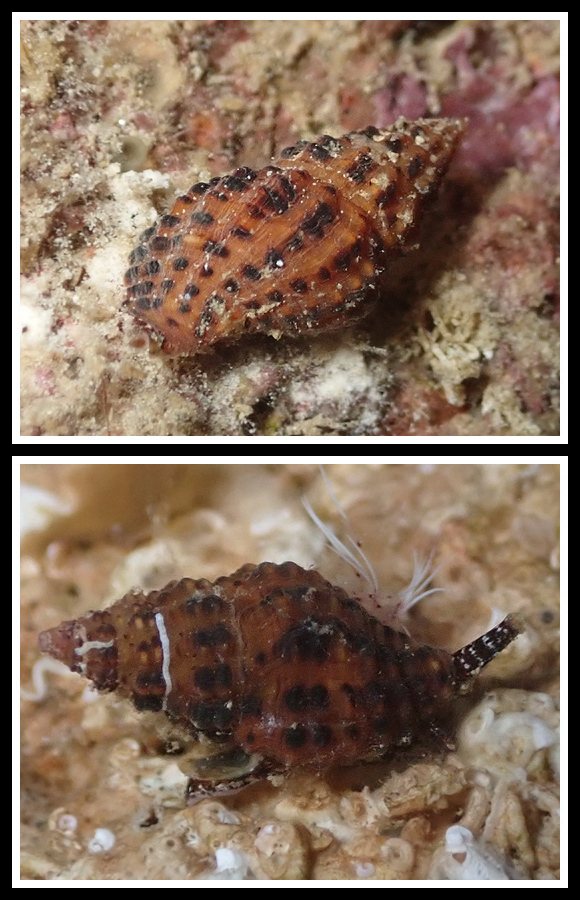
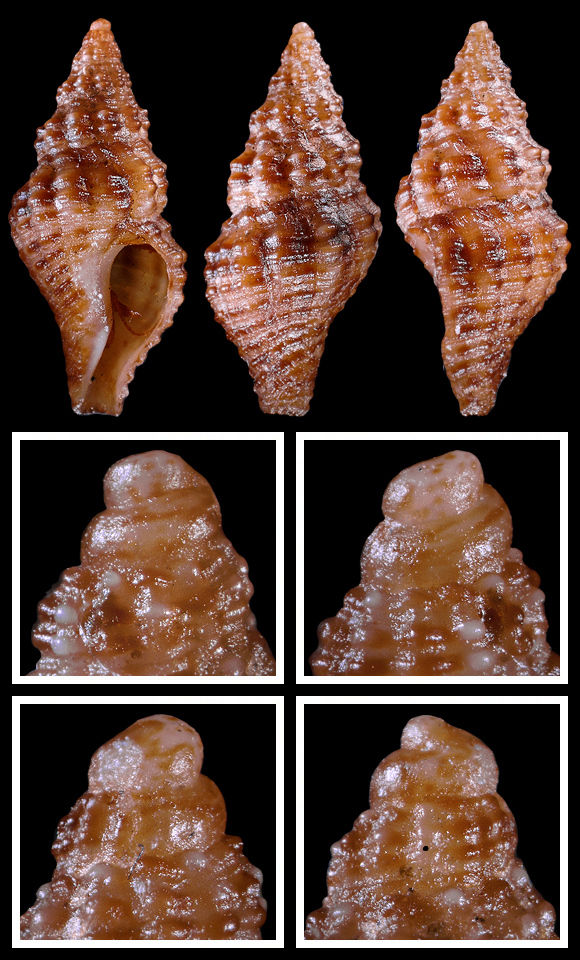
Same spot. 13,5mm.
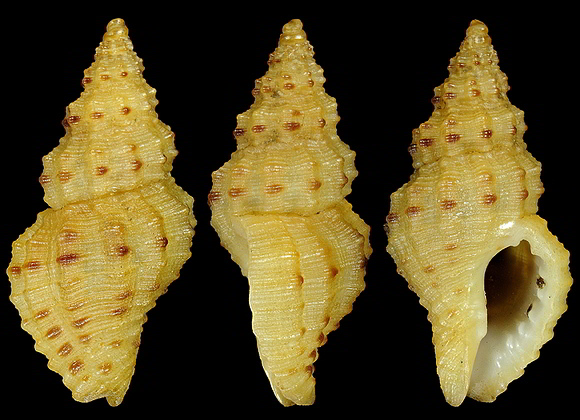
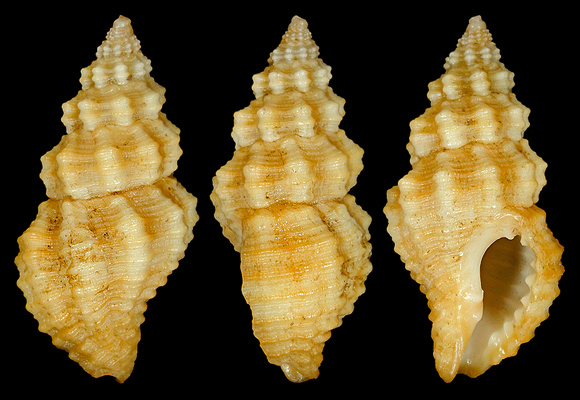
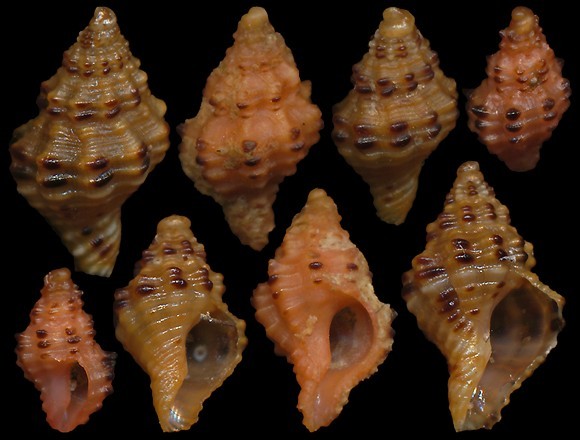
Aplus campisii (Ardovini, 2015) is now considered as a synonym of coccineus (cf. Appolloni & al., 2018). The shell is more or less reddish, ochre or yellowish in colour, with about a dozen of orthocline radial costae crossed by a pair of strong spiral beads at the periphery of each whorl. Other spiral beads are present on the last whorl below the aforesaid pair, and close-set secondary spiral riblets spread all over the surface. The intersections of radials and primary spirals are nodulose like in the other coccineus. Aperture with a thick lip, notched adapically, and adorned, like in coccineus and dorbignyi, with six denticles in addition to the little pair that flank the notch. Columella slightly folded anteriorly; operculum typical of Pisaniidae. The species is named after the captain Angelo Campisi, who dredged the debris in which were found the first specimens. – Above: a yellow shell from 150-200m deep, off Aci Trezza, Aci Castello, Catania, E. Sicilia. 16mm. Original pictures provided by A. Nappo (IT) – (CC BY-NC-SA).