Nappo & Stahlschmidt, 2026
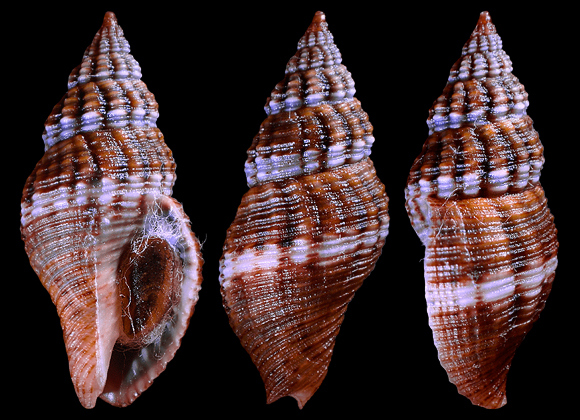
The shell has a unique colour, more or less pronounced: background darker, radial costae lighter. There is a white band at the periphery of the whorls. The spiral sculpture is thinner than in the other mediterranean species; it consists of five spiral cords per whorl, separated from each other by secondary cords. The radial sculpture is less nodulose than in dorbignyi, scaber or scacchianus. The shell is large, comparatively to those of the other mediterranean members of the genus. – Above: a specimen from 1m deep, under rock, Stagno di Cagliari (Santa Gilla), S. Sardinia. 18mm.
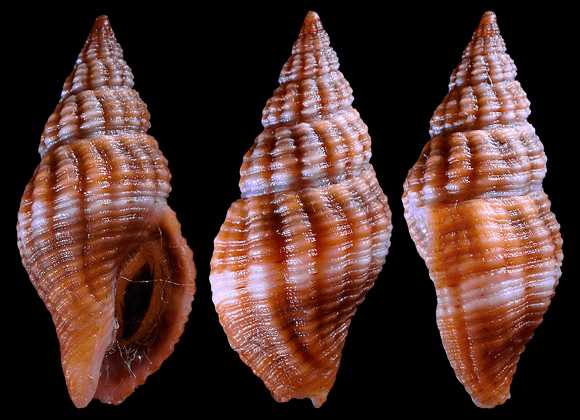
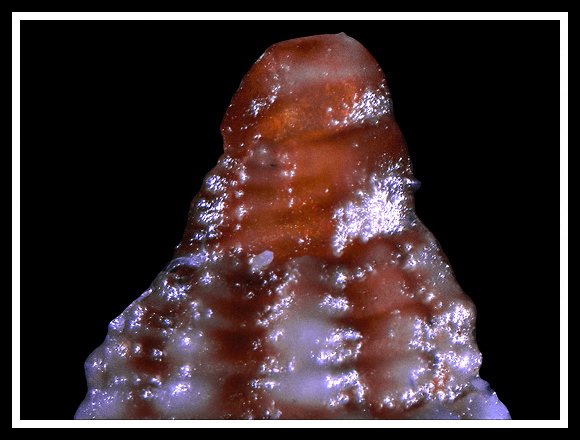
This feature helps to make the difference with the zanclean fossil Aplus pseudoassimilis Brunetti & Della Bella, 2016.
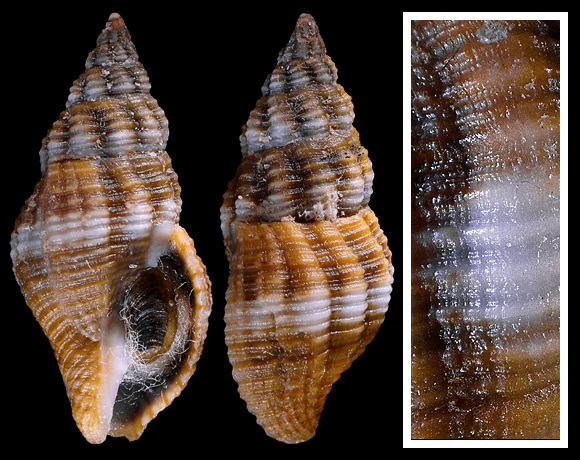
Previously known as Aplus assimilis by various authors, including Reeve (1846), this species « has already been the focus of several recent studies (López Soriano & Quiñonero Salgado, 2014; Nappo & Loi, 2015; Nappo et al., 2018; Delongueville, 2020; Martínez-Ortí et al., 2021; Scuderi & Villari, 2022) due to its alien presence in various localities across the Mediterranean Sea. Its identity has been consistently misinterpreted by previous authors (including the first author of this work) for the simple reason that the type material had not been examined. As no available name could be applied to this taxon, its formal description as a new species has become necessary. » – Nappo & Stahlschmidt: “Playing hide and seek: On the identity of Buccinum assimile Reeve, 1846, with a description of a new species”, Bollettino Malacologico vol. 62(1), Milano 2026, p.105.
A specimen from the near Atlantic. 5-10m on mud and rock bottom, in octopus catchpots, near Olhão, Faro, Algarve, S. Portugal. 18mm.
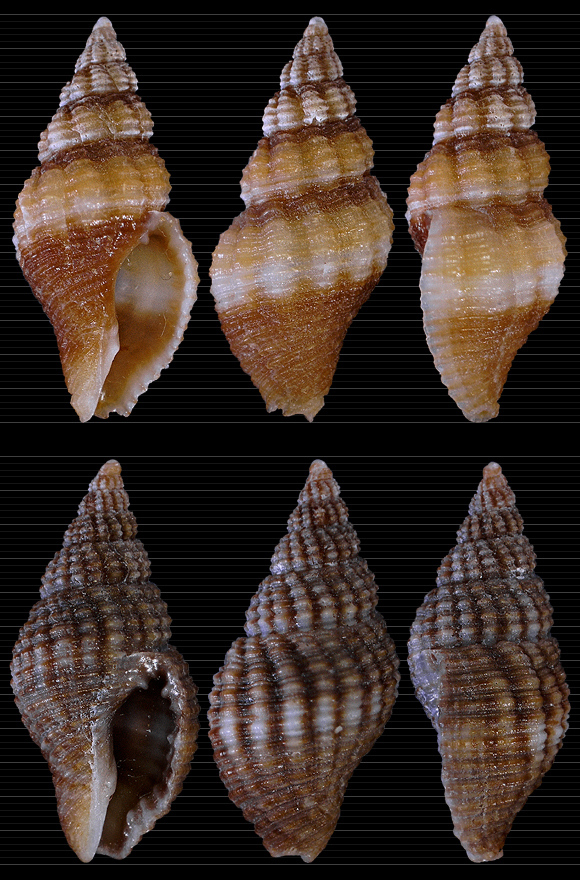
Variations of colour and sculpture in specimens collected at 10-15m deep, Sardina del Norte, Gran Canaria. Sizes around 12mm. This is Dautzenberg who discovered this species in a collection of shells from this area: « M. Tryon considered C. dissimilis as a variant of C. Orbignyi Payr., from Mediterranean; but we feel that these forms are different enough to justify the maintaining of the two species. We do not believe that this Mollusc, well-known in Sénégal, has been indicated so far as living in the Canary Islands. » – Ph. Dautzenberg: “Récoltes malacologiques de M. l’abbé Culliéret aux Îles Canaries et au Sénégal”, Mémoires de la Société zoologique de France vol. III, Paris 1890, p.152.
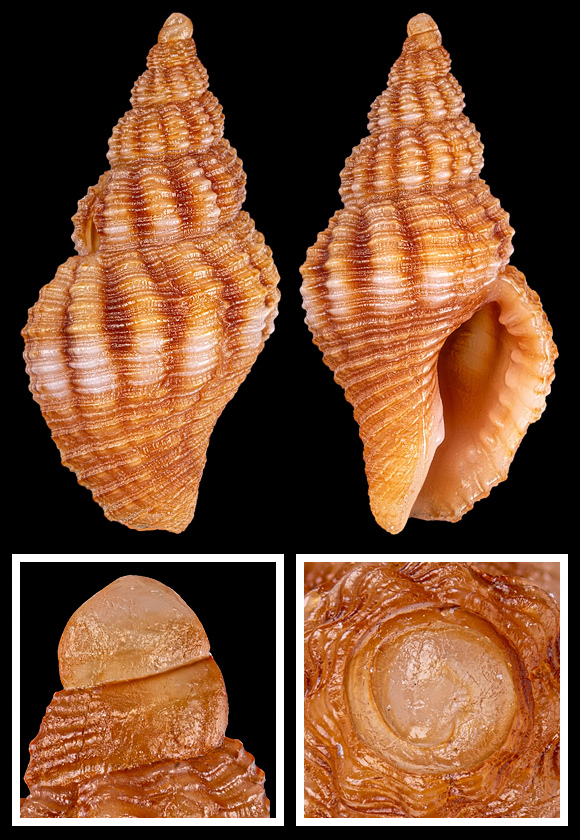
Original pictures kindly provided by A. Nappo (IT).
– (CC BY-NC-SA) –