| Episcomitra cornicula (Linnaeus, 1758) |
 |
Mediterranean.
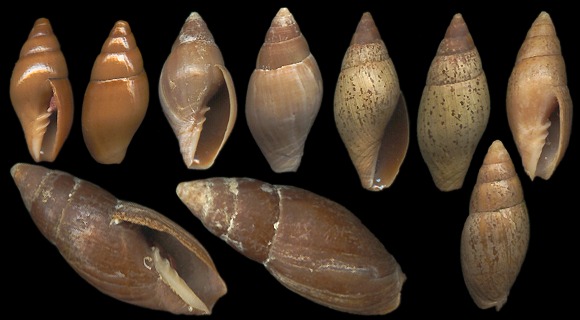
Predator on Sipuncula, in infralittoral hard substrates (gravels, rocks) or buried in sedimentary pits. Basionym: Voluta cornicula. The synonymy describes the species: cornicularis, glabra, laevigata, lutescens, nitens, obtusa, spongiarum… – 2m deep, off an uplifted prehistoric harbour, Falasarna bay, Kissamos, W. Crete. 12-22mm. The largest shells, more slender, are Isara cornea (Lamarck, 1811), for comparison. |
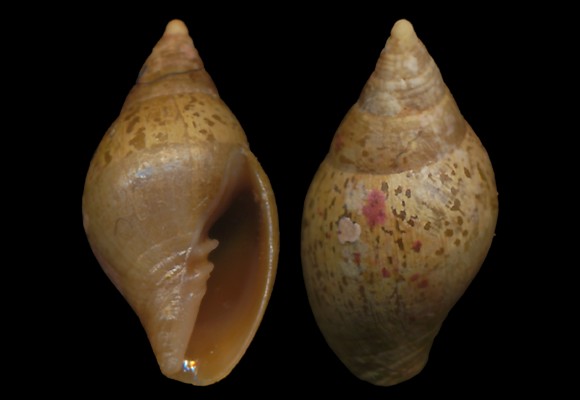 |
| In algae, on Spondylus gaederopus Linné. 9m deep, on rocks, Astypálaia island, Kykládes, south Aegean. 8,5mm. |
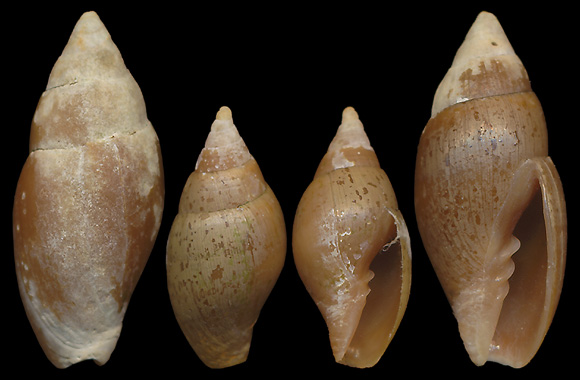 |
| 8m deep, at the base of conglomerate bank, 600m E. of Mochlos, NE. of Kolpos Mirabellou, Lassithi, N. Crete. 9,5mm (E. cornicula with two conspicuous columellar folds and one, anterior, obsolete)-12mm (I. cornea with three marked folds). |
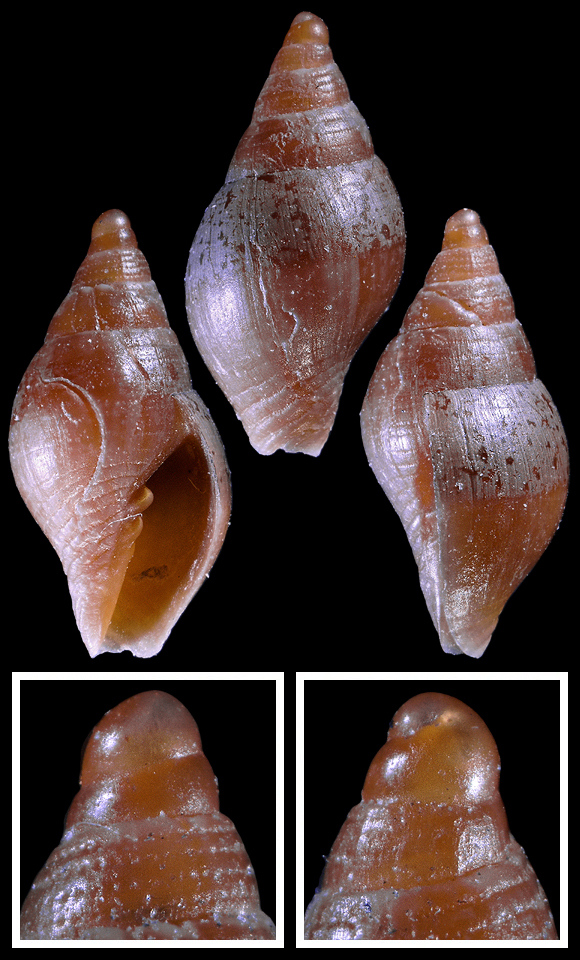 |
| Protoconch paucispiral. Sculpture made of 4 punctiform spirals on the first whorls. Young shell from 55m deep, Ognina, Catania, E. Sicilia. 5,75mm. |
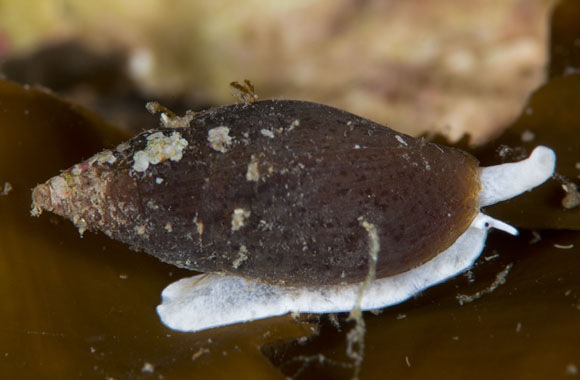 |
Animal almost entirely white. Live specimen pictured off the Costa Brava, E. Spain. Image provided by J. Regàs (ES).
– (CC BY-NC-SA) – |
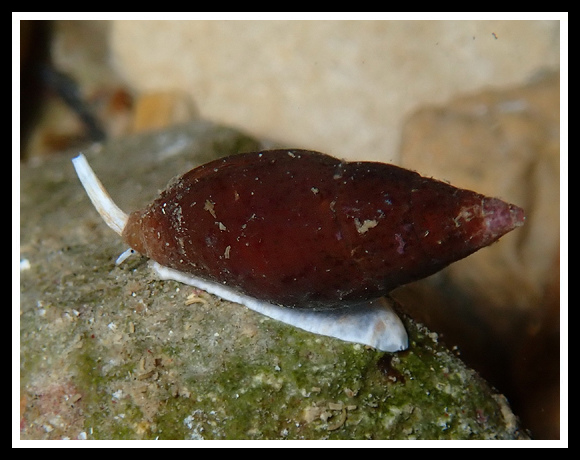 |
| Another specimen from La Madrague de Montredon, south of Marseille, Provence, S. France. Original picture provided by S. Le Bris for iNaturalist – (CC BY-NC). |
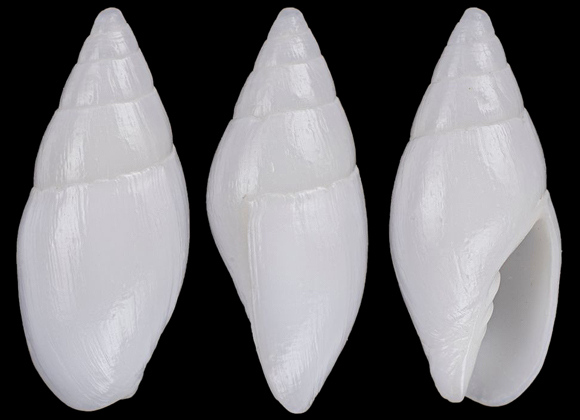 |
Albino specimen from Salamina island, Attikí, SE. Greece. Original pictures provided by A. Nappo (IT).
– (CC BY-NC-SA) – |
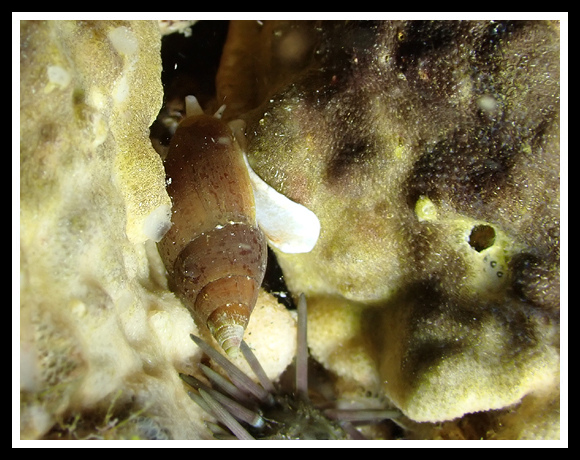 |
Upper infralittoral, Cabo de Palos, Murcia, S. Spain. Original picture provided by P. Corbrion for iNaturalist.
– (CC BY-NC) – |
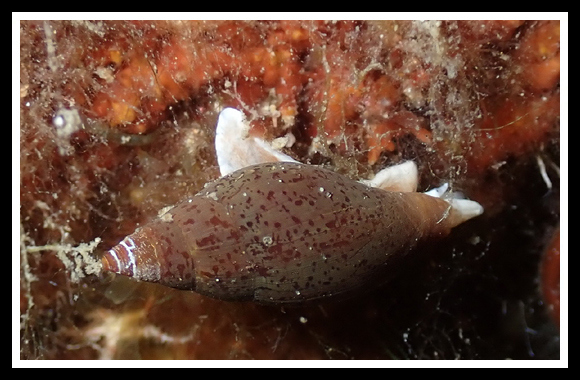 |
| Saména Cove, south of Marseille. Original picture provided by S. Le Bris for iNaturalist – (CC BY-NC). |