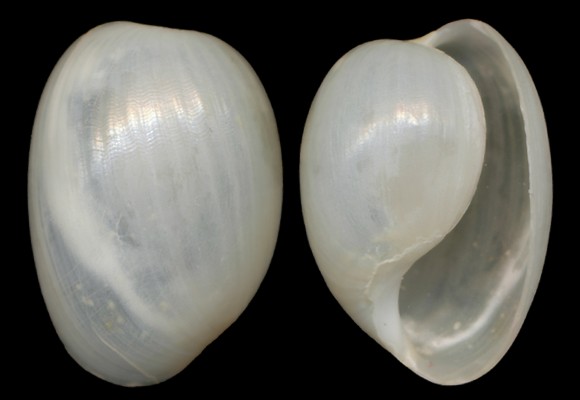
Ghjunchitu bay, Isola Rossa, NW. Corsica. 10mm.
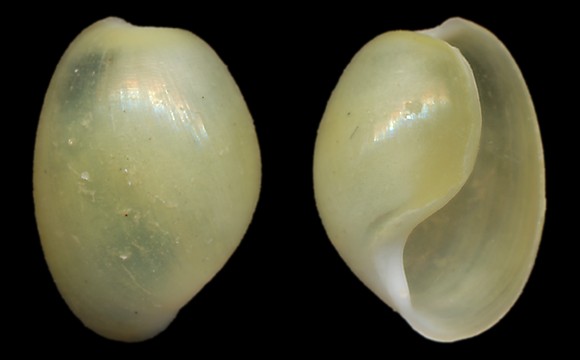
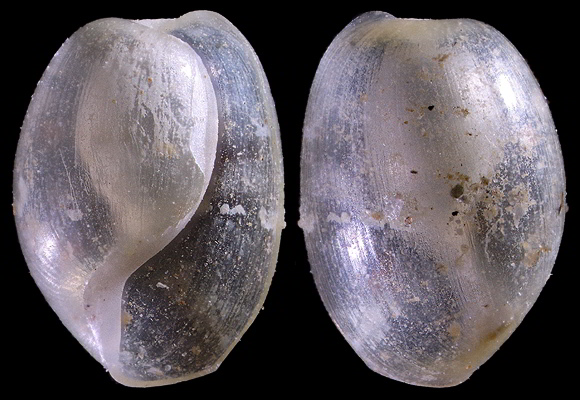
L’Escala, Girona, Catalunya, NE. Spain. 4,5mm.
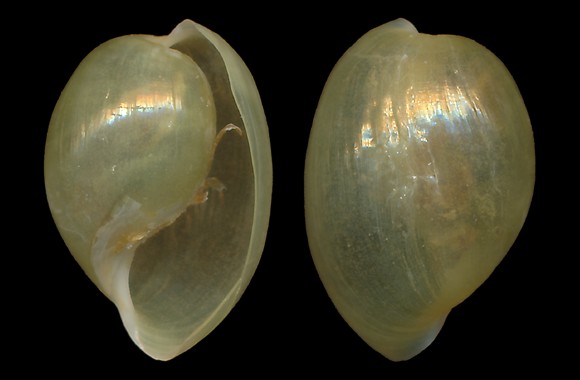
« The shell is subglobular, fragile, translucent, with a sunken spire. The aperture is slightly longer than the length of the shell […]. The surface is smooth with delicate growth lines and it is covered with a thin clear yellow-green speckled periostracum […] the shell shows slight variability in the sizes and length/width ratio of the shell and of the aperture. » – Talavera, Murillo & Templado: “The genus Haminoea Turton & Kingston, 1830 (Opisthobranchia, Bullomorpha) in the south east of Spain with the description of a new species”, Bollettino Malacologico vol. 23(1-4), Milano 1987, p.55.
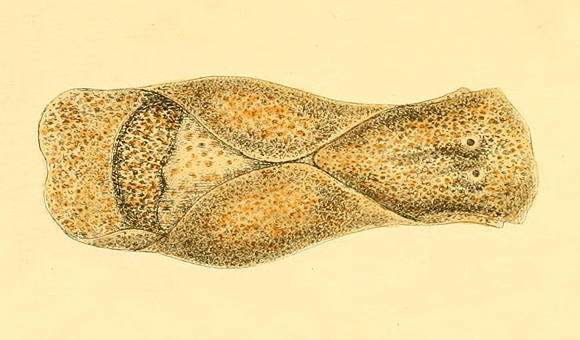
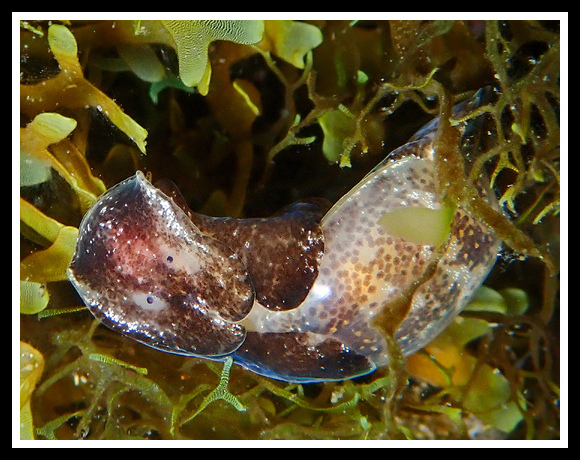
« The cephalic shield is deeply bilobuled in its posterior end. The eyes are in two non-pigmented areas of the tegument. The parapodial lobes are little developed and cover the shell laterally, while its rear part is concealed by the external posterior palial lobe. The background body color is light fawn with dense dark mottling, which gives grey aspect to the whole. Orange and white specks can be seen through the shell in the mantle area. » – Talavera, Murillo & Templado: Ibid.
Canal du Rhône à Sète, western entrance, Sète, Hérault, Occitania, S. France. Original picture provided by A. Groul for iNaturalist – (CC BY-NC).
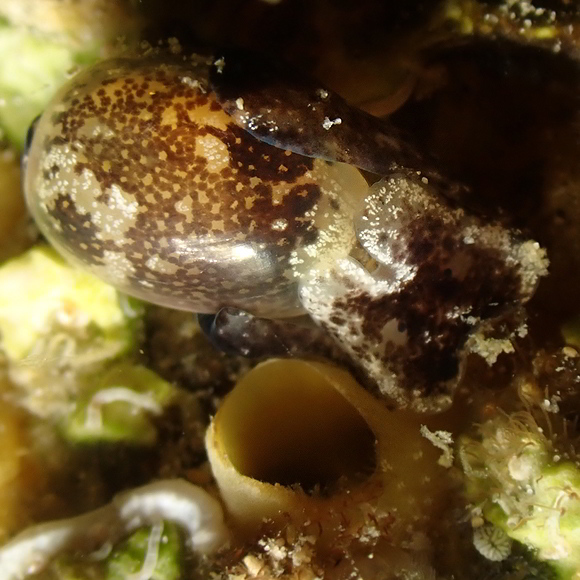
The parapodial lobes do not cover the whole shell.
Same spot. Original picture provided by P. Corbrion for iNaturalist – (CC BY-NC-SA).
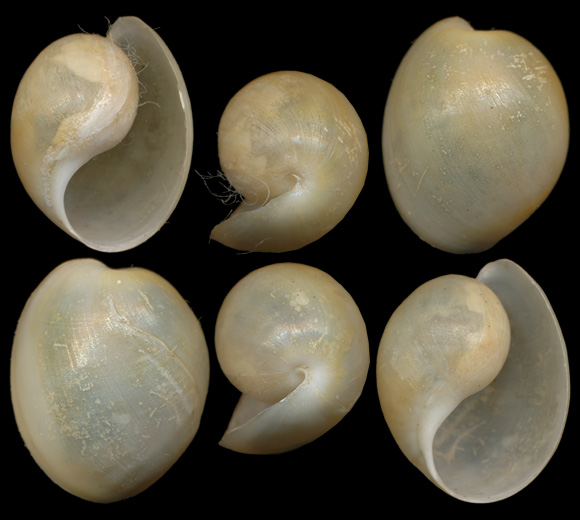
« Var globosa: smaller, thinner, globular, pale yellowish-green or creamcolour. […] More than thirty years have elapsed since I had the good fortune to observe, in company with my late friend Mr. William Clark, hundreds of these creatures, in the shallow and slushy pools left by the tide near high-water mark on Dawlish Warren; soon afterwards, owing to a shifting of the sands, these pools disappeared, and with them the Bulla. When it swam or floated, the side-lobes of the foot were withdrawn from the shell and spread out like a pair of fins. The shell is occasionally distorted, having either a rude spiral groove below the apex or a depression behind the pillar » – J. G. Jeffreys: British conchology vol. IV, London 1867, p.438.