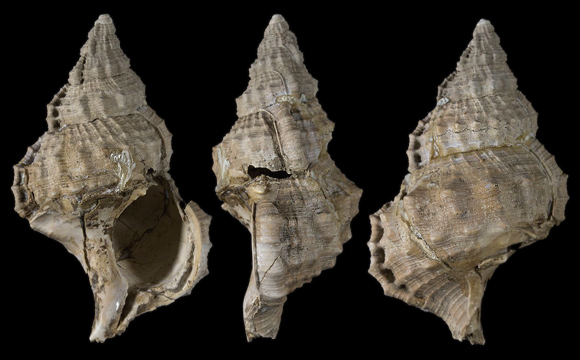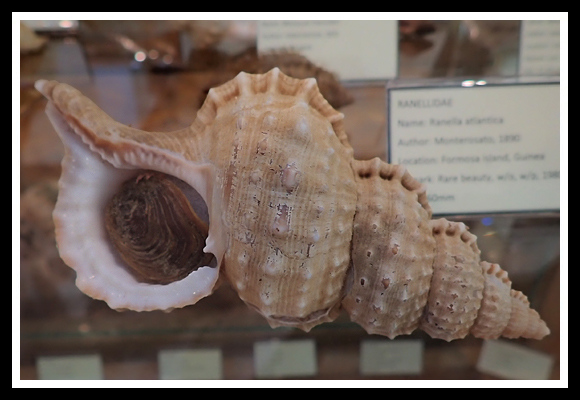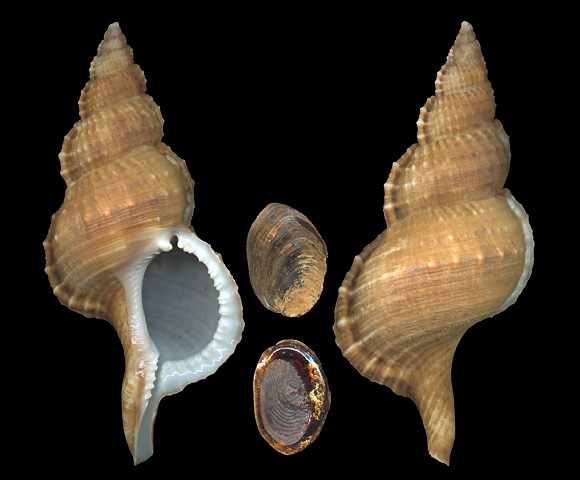
British Isles to Namibia and South Africa, Azores to Canarias, Mediterranean, Réunion, St-Paul & Amsterdam, New Zealand to Tonga, Caribbean to Uruguay. Predator in various bottoms of outer shelf and slope (100m to 800-900m). Possible scavenger.
Basionym: Murex olearium.
Slender specimen from 300m deep, off Málaga, Andalucia, S. Spain. 142mm.
Synomyns: gigantea, incerta, maculata, ranina, reticularis…
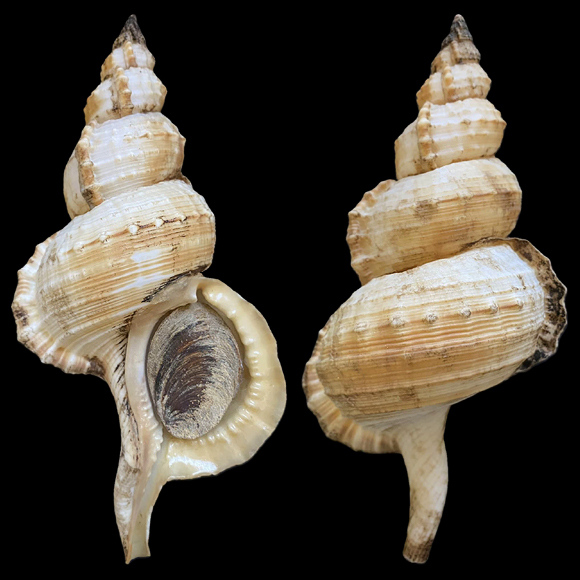
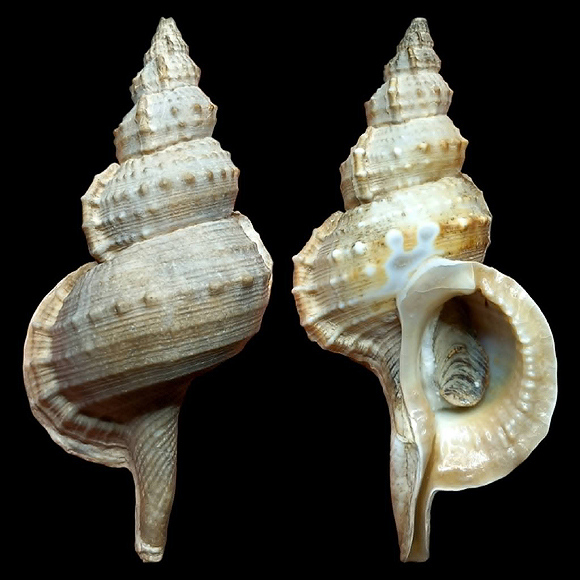
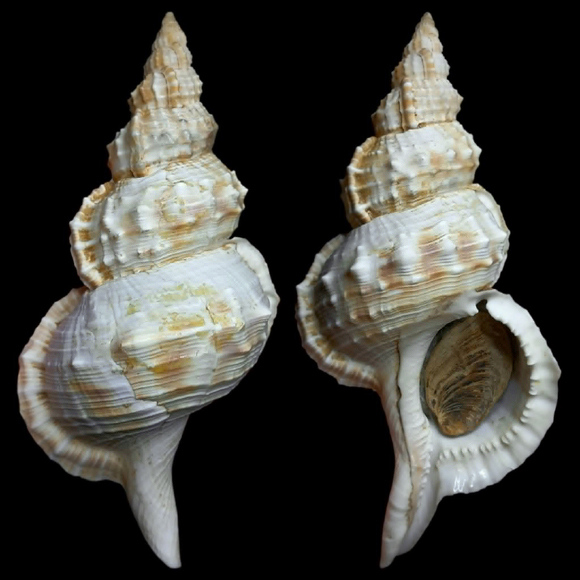
Original pictures provided by J. Juárez Ruiz (ES).
– (CC BY-NC-SA) –
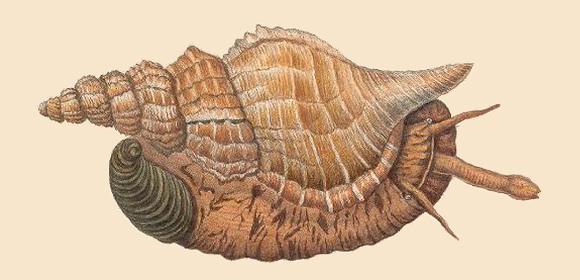
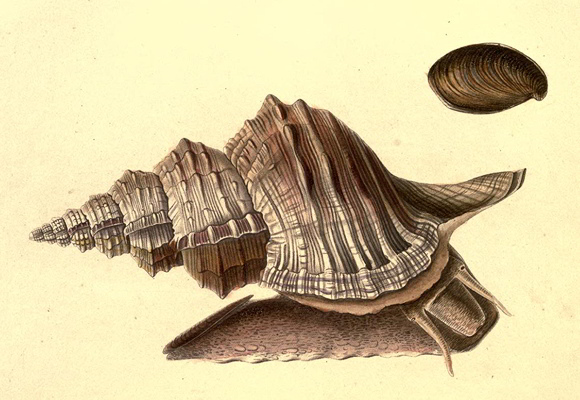
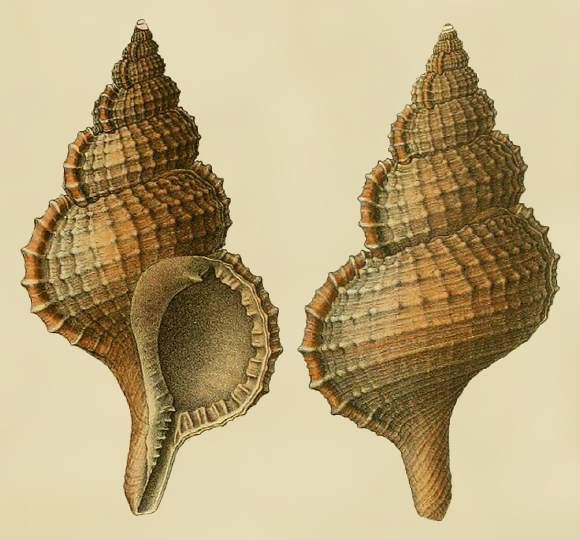
« Shell spindle-shaped, with a high gyrate spire and a short canal, bulbous in the middle, covered with a pale gray, felted, longitudinally arranged epidermis, below whitish with irregular brown-redish blotches and spots. There are nine strongly arched whorls regularly increasing, only slightly flattened under the deeply recessed suture; they are densely covered with irregular spiral lines; the upper whols appear regularly with four stronger spiral bands and equally strong oblique ribs, the interfaces forming small nodules. »
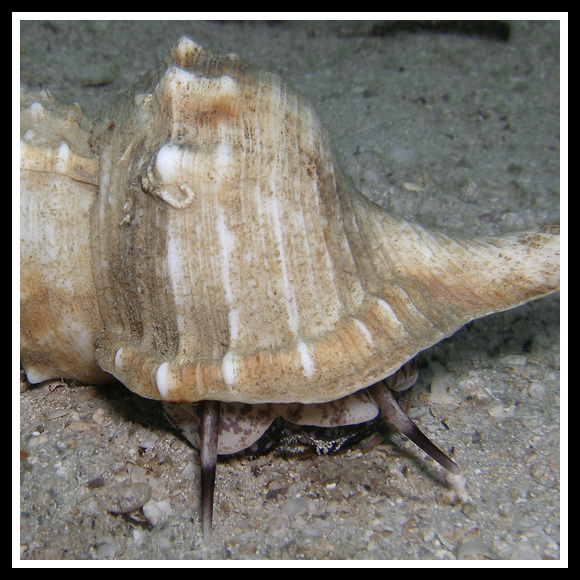
– (CC BY-NC-SA) –
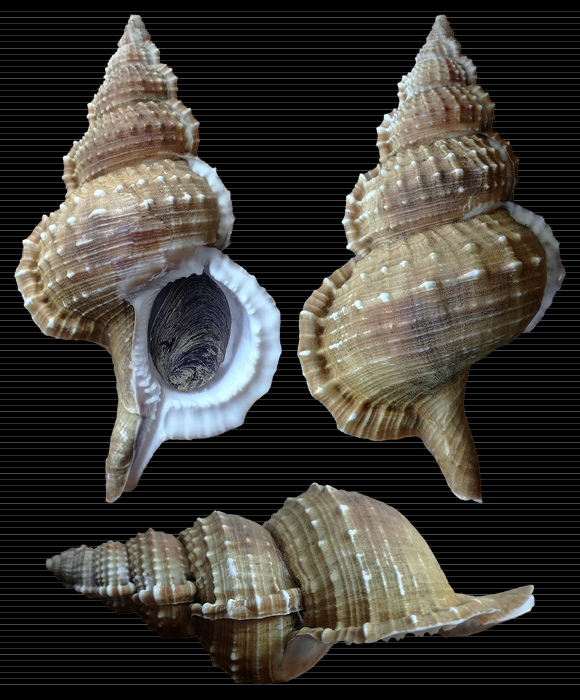
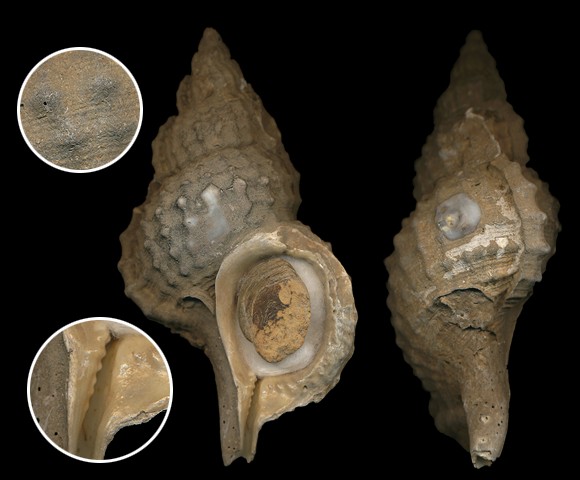
Morphology: the whorls vary « from strongly angulated, with few nodules, to evenly rounded, with several rows of small, close nodules » (Beu in Scarabino, 2003). Usually, the rows of nodules are 2-3 in number on the last whorl in front view, but they are 5 in the population of the Grande Vasière (100-125m), off W. France. The shells from this area are also heavier, with about 70% more weight. – Above: specimen with strongly marked knobs, from 360m deep, off San Vicente de la Barquera, Cantabria, N. Spain. 115mm.
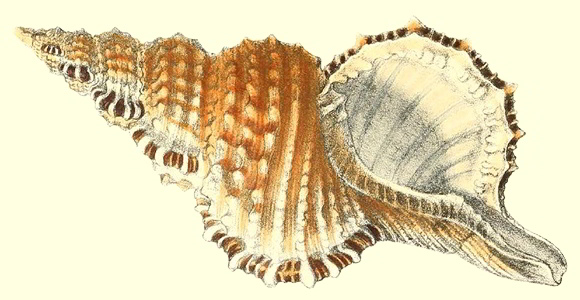
« Shell fusiformly turreted, ventricose, spire very much acuminated, varices rounded, obliquely separated; whorls transversely rather obsoletely ribbed and elevately striated, ribs noduled, striae slightly waved; whitish, stained with light brown; columella a little wrinkled, canal rather long, carved at the back with narrow, regular ridges; aperture ovate, lip toothed, teeth ranged in pairs. »