Lamarck, 1798
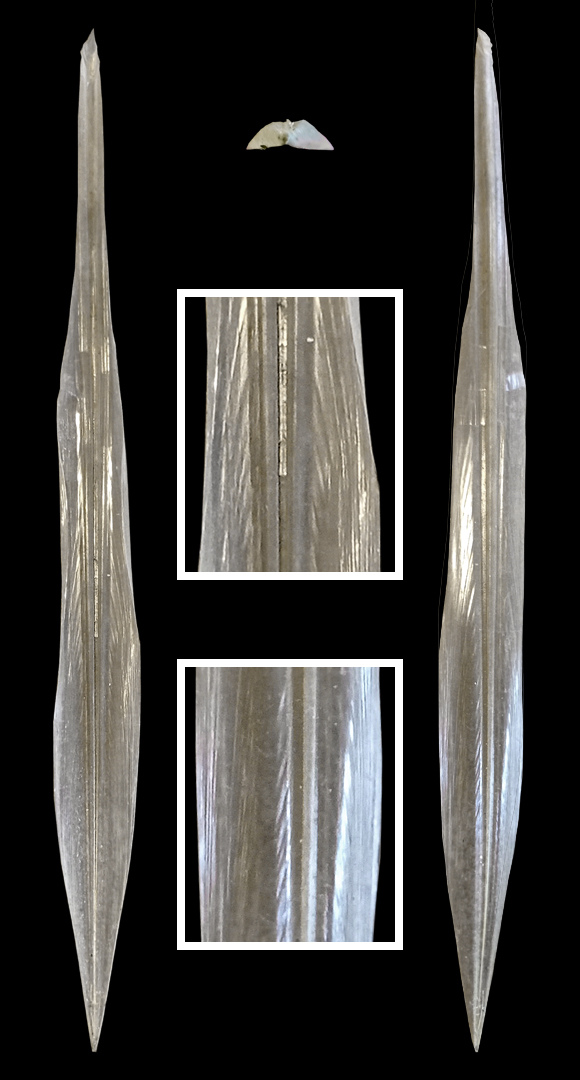
Eastern Atlantic, from the North Sea to at least Namibia, Mediterranean. Absent in the Black Sea and in the Baltic. Predator on various fishes and cephalopods, from the surface down to the continental shelf and the upper slope. The internal shell is slender, with narrow wings.
Above: gladius of a large male fished in southern Adriatic, off Cavtat, Croatia. Size about 30cm.
Above: gladius of a large male fished in southern Adriatic, off Cavtat, Croatia. Size about 30cm.
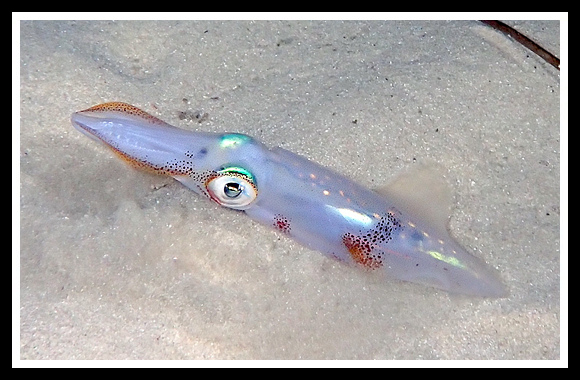
Original picture provided by F. André for iNaturalist.
– (CC BY-NC) –
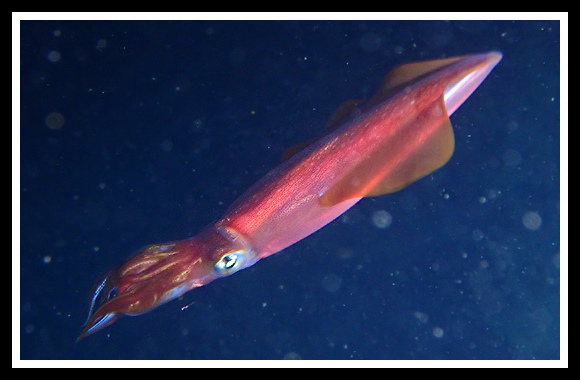
Original picture provided by F. André for iNaturalist.
– (CC BY-NC) –
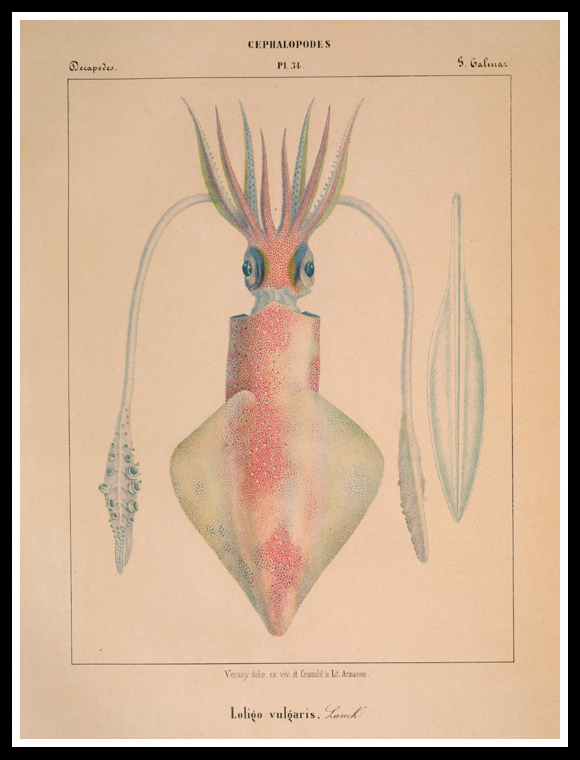
« Alive and in a condition of perfect tranquility, the entire body of this cephalopod is a transparent, hyaline white, strongly iridescent, against which the burnished silver of the eyes stands out brilliantly, as well as a few silvery reflections along the arms […] In this state, the chromophores are so contracted that no trace of them is visible; however, at the slightest movement that disturbs it, the chromophores appear all over the body’s surface: at first, they are very small and a very dark reddish-violet or neutral color; then they expand and turn a carmine-red. » – Op. cit. p.91.