| Acanthocardia aculeata (Linnaeus, 1758) |
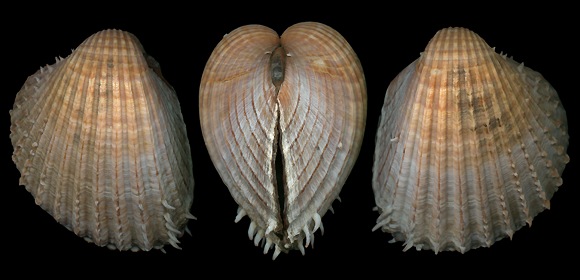 |
Lofoten, Norway & British Isles to W. Morocco, Mediterranean.
Original taxon: Cardium aculeatum. Subtidal to 100m deep.
20m deep, Málaga, Andalucia, S. Spain. 91mm. |
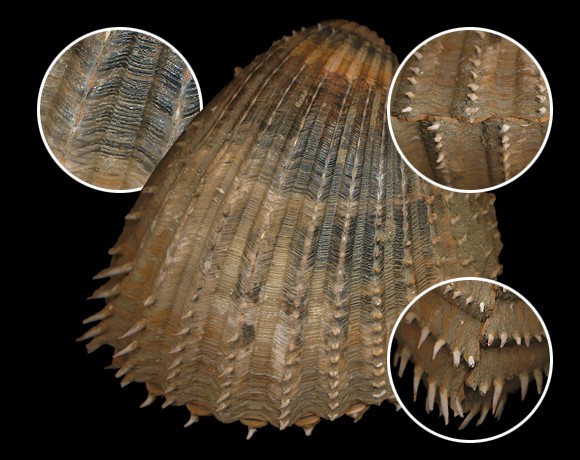 |
| An uncommon species, scarce in NE. Atlantic. The spines can reach impressive sizes. This muddy specimen comes from the gulf of Brest, W. Brittany, NW. France. 91mm. |
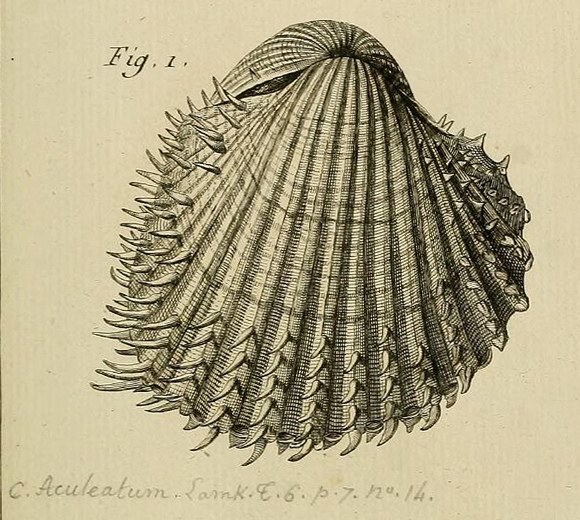 |
| Adult specimen drawn in Tableau encyclopédique et méthodique… — Histoire naturelle des Vers — Atlas vol. II, Paris 1827, via BHL. |
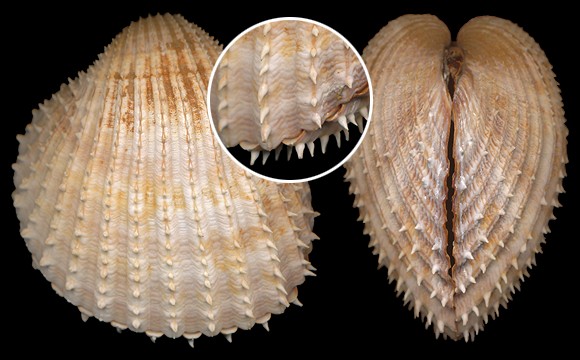 |
| Above and below: from Gulf of Brest again. |
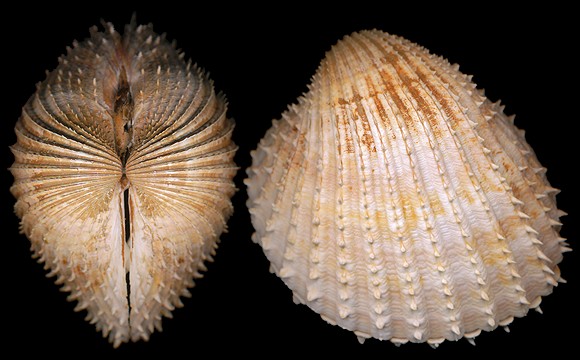 |
| This is the form “alba” Philippi. 60mm. |
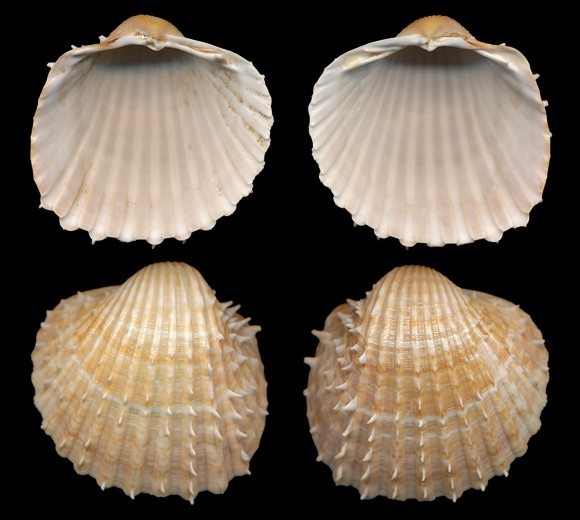 |
| Young specimen. The shape is rather different, but the teeth, the spines, the ribs are those of aculeata. – Beachstormed, entrance of Ayrolles lagoon, south of Gruissan-Plage, Aude, Occitania, S. France. 35mm. |
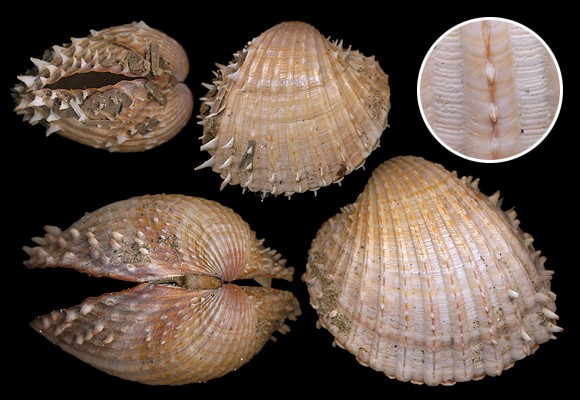 |
| Same spot, young shells. 33-50mm. |
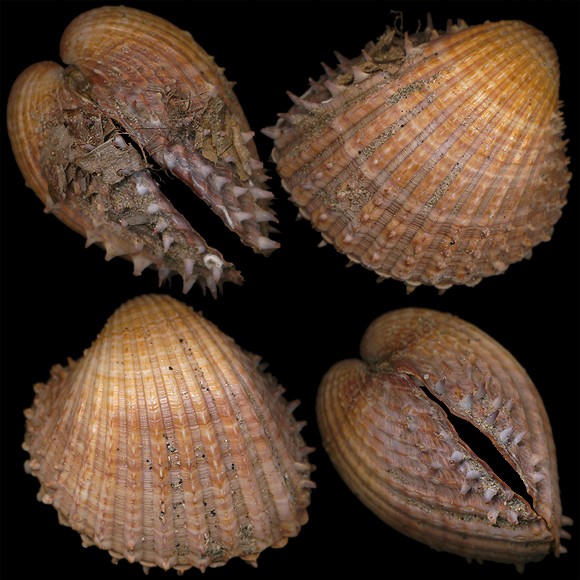 |
| Same spot, subadult shells. 63-65mm. |
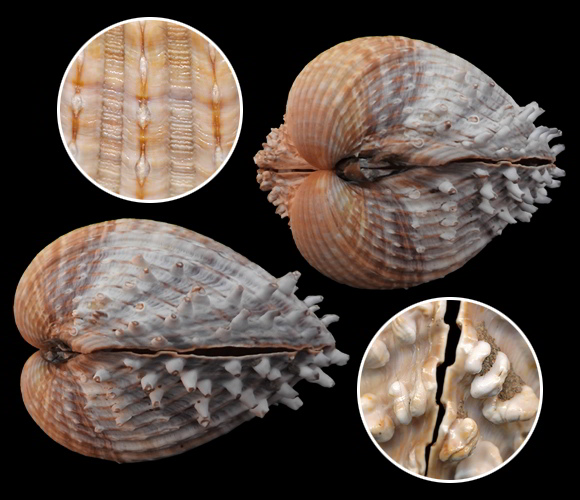 |
| Same spot, adult shell. 80mm. |
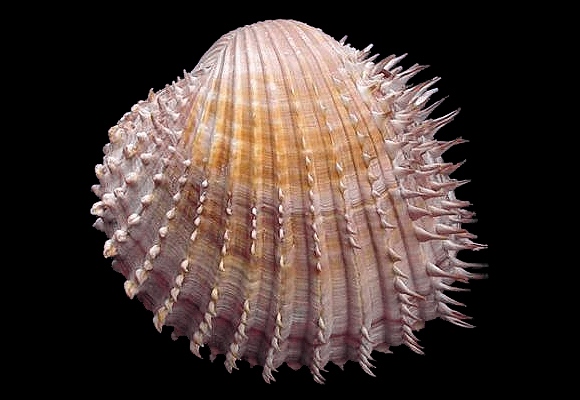 |
12m deep, on muddy sand, Saronic Gulf, SE. Greece. 80mm.
Original picture provided by P. Ovalis (GR).
– (CC BY-NC-SA) – |
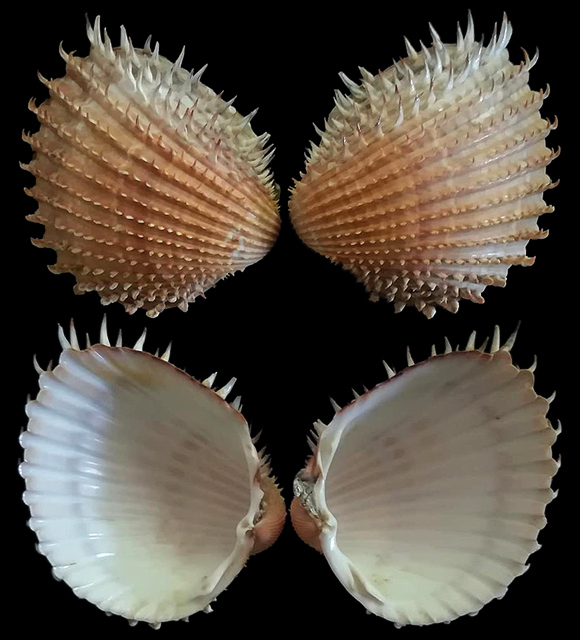 |
5-10m deep, Omiš, east of Duće, Dugi Rat municipality, Split-Dalmatia Comitat, S. Croatia. 100mm.
Original picture provided by N. Lete (HR).
– (CC BY-NC-SA) – |
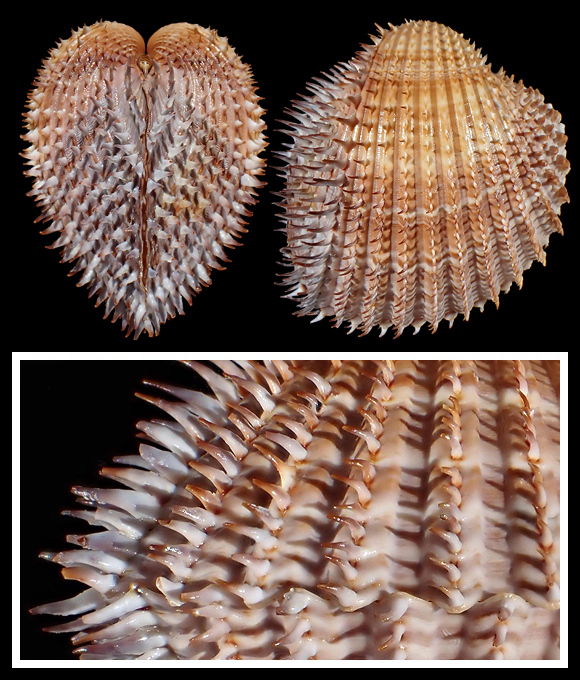 |
A specimen from Pag island, N. Croatia. 88,4mm.
Original pictures provided by D. Šindrbálová (CZ).
– (CC BY-NC-SA) – |
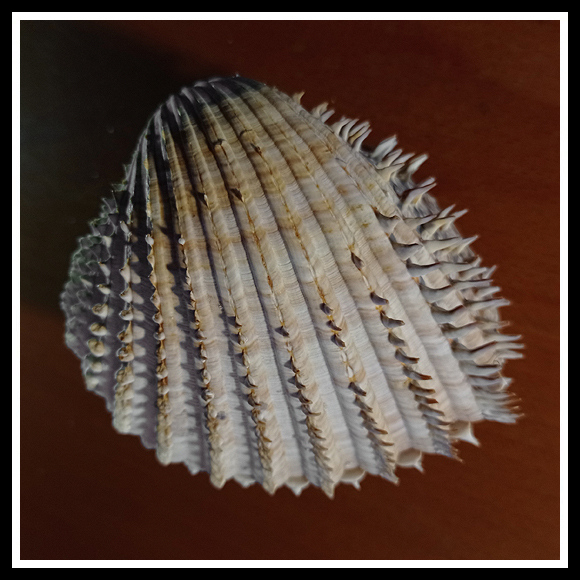 |
| A large specimen from Port-Barcarès, Eastern Pyrenees, S. France. Size about 90mm. |
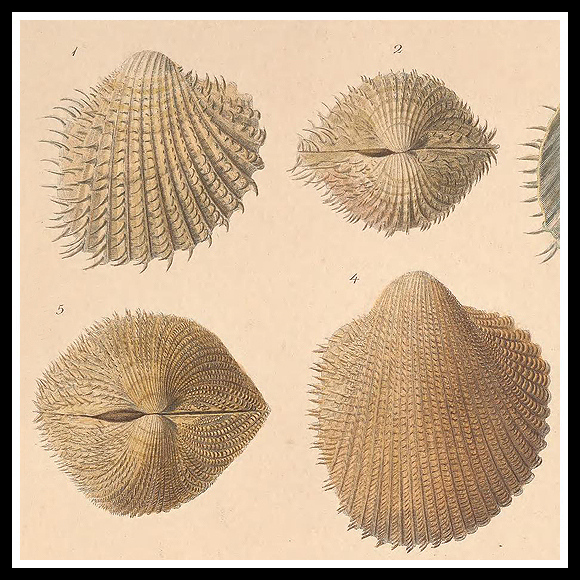 |
| Comparison between aculeata (1-2) and echinata (5-4) in G. S. Poli: Testacea utriusque Siciliae… pl. XVII. |
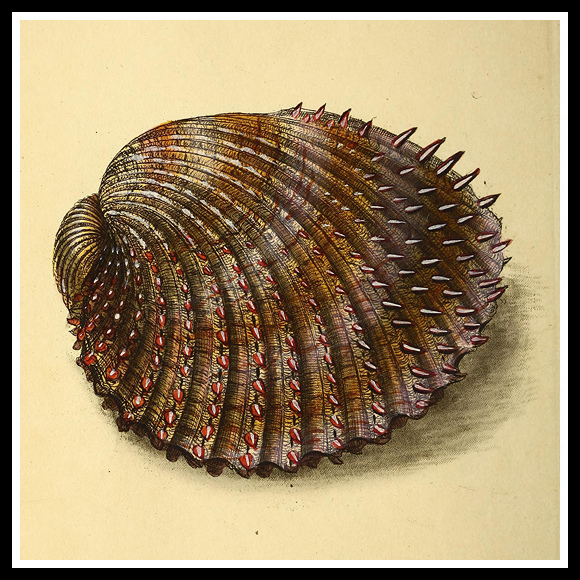 |
The species in E. Donovan: The natural history of British shells vol. I, London 1799, plate VI.
« It is a thick shell, with high radiated ribs, and beset with large processes or spines that are hollowed. It is covered with a fibrous epidermis, of a blackish colour, varied with light browns; the colour beneath is white, with a faint tint of red, or rose colour. Marginal circumference ten inches and an half. This is one of the six rare species Da Costa could not procure for his work, and to which he alludes in the preface. » |