| Lutraria magna (da Costa, 1778) |
 |
Southern Irish Sea, Channel Islands to Sénégal, Mediterranean. Also in the Red Sea (P. Vine: Red Sea Invertebrates, London 1986). Burrowed in muddy sand from lower intertidal down to at least 50m deep. Suspension feeder.
Basionym: Chama magna. A synonym is oblonga.
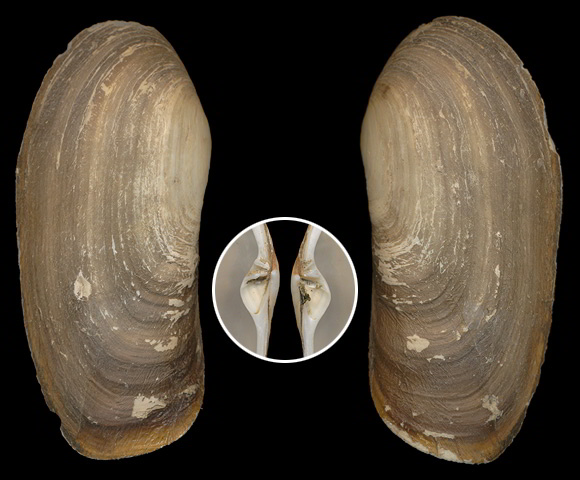
50-80m deep, off Málaga, Andalucia, S. Spain. 98mm. |
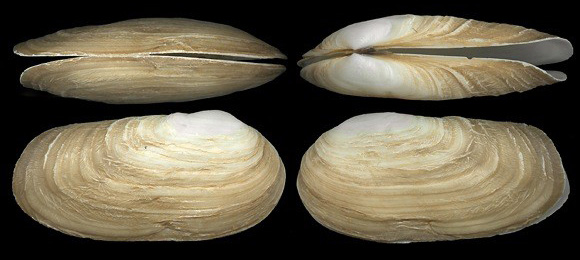 |
Some differences between magna and lutraria: the umbones are more anteriorly placed in magna; the two branches of the V-shaped cardinal tooth of the left valve do reach the edge in magna, they do not in lutraria; the angle of the V is ≥ 90° in lutraria, always < 90° in magna. Above: subadult from Málaga, with the summits very anteriorly placed. 50mm. |
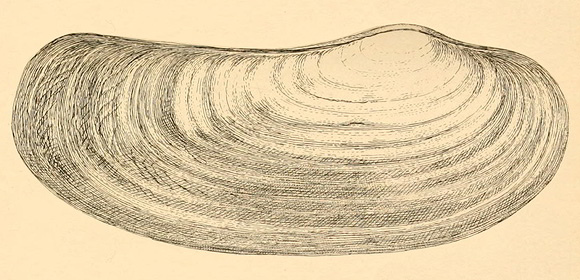 |
| Lutraria oblonga in plate XIII of Forbes & Hanley: A history of British Mollusca and their shells vol. 4, London 1853. |
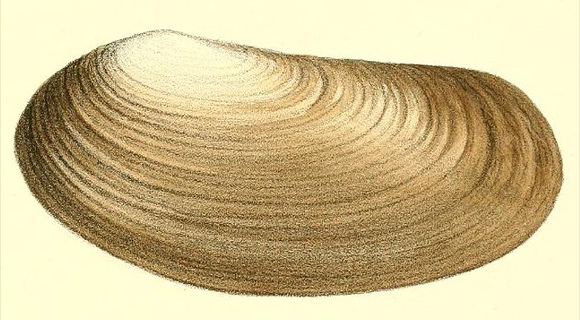 |
| The species in J. G. Hidalgo: Moluscos marinos de España, Portugal y las Baleares, Madrid 1870, plate VI… |
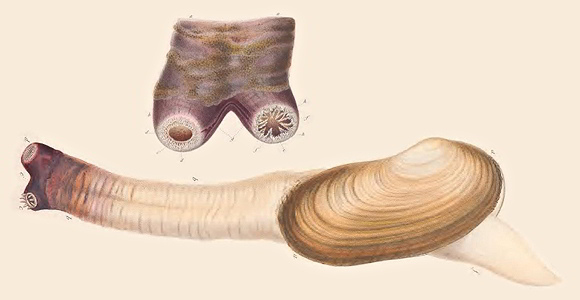 |
| …and in G. P. Deshayes: “Hist. Nat. Mollusques t. I”, Exploration scientifique de l’Algérie, Paris 1844-1867, plate 37. The siphons are of a deep purple-red at their extremities, which diverge almost at right angles. |
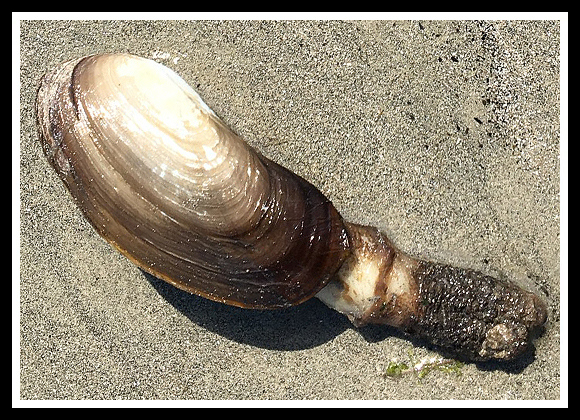 |
Conform to the drawing displayed hereabove, a specimen laying on the foreshore after a violent storm at Siracusa, SE. Sicily. Original picture provided by A. Brancato (IT).
– (CC BY-NC-SA) – |
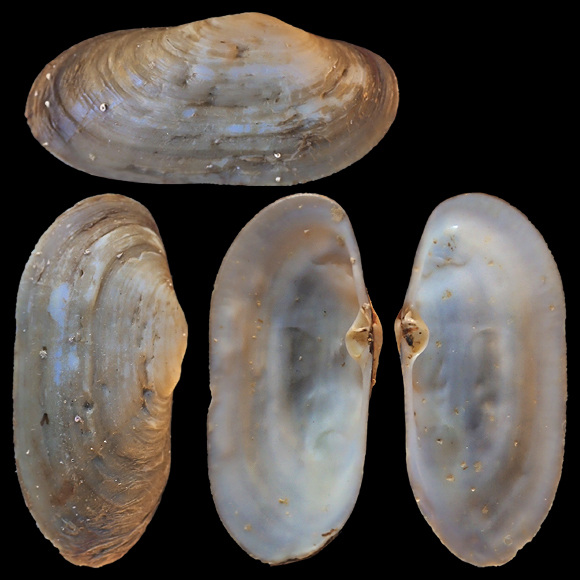 |
| A young specimen from S. Portugal, collected at very low tide on muddy bottom, near Olhão, Faro, Algarve. 58,7mm. |
 |
| As the individual grows older, its valves elongate by bending slightly on the posterior side. Here, a subadult, with the valves still straight. Plage du Phare de Saint-Gervais, Fos-sur-Mer, Bouches-du-Rhône, S. France. Original picture provided by F. André for iNaturalist – (CC BY-NC). |
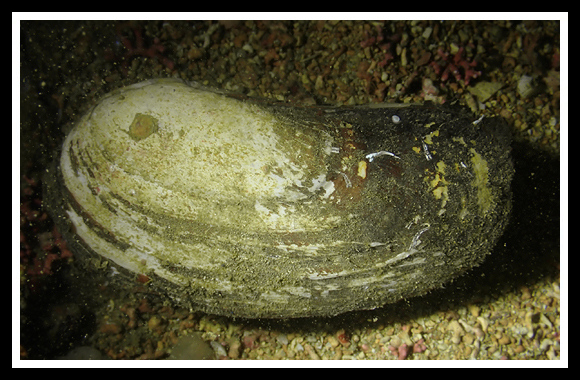 |
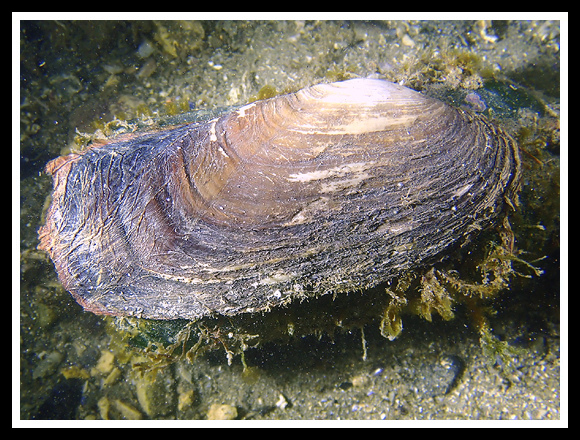
| Adult. Pointe de l’Armorique, Larmor area, Plougastel-Daoulas, Finistère, W. Brittany, NW. France. Original picture provided by T. Gelez for iNaturalist – (CC BY-NC). |